Posts

Venison with Supercharged Gin and Dried Limes

Image
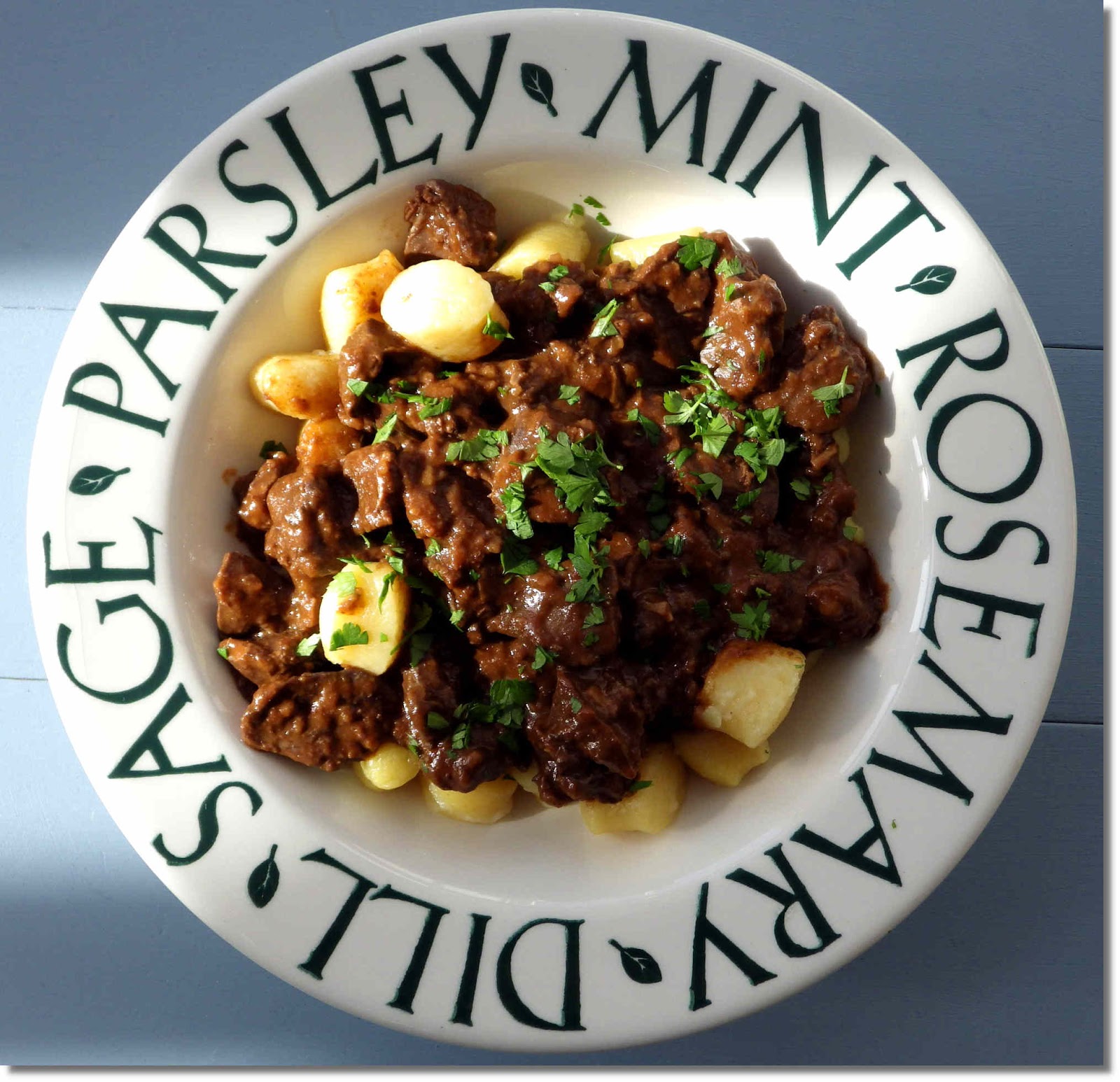
Venison is excellent in slow-cooked casseroles but they're often very rich and heavy. There's nothing wrong with that on cold, dark evenings in winter, but sometimes I'd welcome something a little less hefty. This dish uses a classic venison casserole approach but gives a lighter, fruitier result without losing the characteristic flavour of the meat. I admit that this is an odd combination of ingredients but I've never been very good at the authenticity malarkey. I find gin very useful in cooking, especially with game or as part of a cure for fish. Not long ago I was using some gin as part of a marinade and it occurred to me that I could have a special bottle in the cupboard that would have “marinade” flavours built in. So I made a supercharged, marinade gin as follows. Take a half bottle of gin (a decent supermarket London dry gin will do) and add a few extra juniper berries, a few pink peppercorns and 2 reasonably large sprigs of rosemary to the bottle. Reseal it,...

The Really Useful Two Pepper Sauce

Image
At this time of year I know it's usual for food bloggers to offer Christmas cake and turkey recipes but I'm really not a Christmas person. So instead I'm offering this not entirely seasonal recipe because I think it might prove useful for all those festive leftovers. Now I'm about to let you into a secret, so keep this to yourself. This deceptively simple recipe was a staple of a late and much lamented Indian restaurant some years ago. They used this sauce in a number of different ways and in a number of different dishes. I've adapted this recipe a little since then and reduced the quantities for home use. To my shame, I can't recall the name of the chef from whom I stole, sorry I meant to say  learnt , the recipe but I wouldn't be at all surprised to hear that it still serves as a base in one or two restaurants somewhere in our fair land. This is a remarkably useful and adaptable concoction that can be used either hot or cold. Try serving small, undilut...

Fromage Frais Gâteau

Image
I've called this a gâteau because that's what the French original was called but this is definitely a dessert (or maybe a sweet snack) and not a cake to be nibbled with tea. The French seem to have a great love for flan-like desserts of various kinds such as the classic flan pâtissier,  le millas  made with maize flour from the Charente or maybe the pastizzu made with semolina from Corsica. This dish may follow that tradition but it's a modern and health-conscious invention. I've come across it in many forms in the last 20 or 30 years and I've always been a bit doubtful about some of the simpler and lighter forms of the recipe. Well, having played around with the recipe for a bit, I now realise that I was wrong. A simple and low fat version suits my less complicated tastes these days. If you want a dessert that's lighter and healthier than most cheesecakes but still creamier and smoother than a cake, then this might be right for you as well. In France this...

Chicken Liver Sauce From Back When Tratts Were Fab

Image
I've just been listening to someone on the radio wittering on about how terrible British restaurants were back in the 1960s and 70s. This version of history seems to be accepted as the official narrative today. I admit that many of the restaurants back then were pretty bad. In fact some of them were laughably awful such as the trendy restaurant that served only tinned food. But there were very good places to eat if you looked hard enough in the right places. I was lucky because the right places were often in London and that's where I happened to be living. If you headed for one of the simple trattorias scattered around town then you could get decent, straightforward Italian food at a reasonable price as well as encountering waiters with comically large pepper grinders. There wasn't a huge choice of food in those bygone tratts but some options were very similar to what's on offer in restaurants today. For instance, I swear I had crushed avocado on toast in a little pla...

Hake with Cider and Apples

Image
This dish might sound a little eccentric - fish, cider and apples aren't usually best friends - but somehow it works. The sauce adds a savoury depth of flavour and the apples provide a contrasting acidity. Although it's more typical of Normandy, the last time I came across this kind of combination was on the Île d'Oléron. And that's entirely appropriate because I find the Île d'Oléron pleasingly eccentric too. To be honest, this dish isn't usually made with hake - cod or pollock would be more likely - but I'm very fond of hake so that's what I'm using. You could use pretty much any white fish you fancy. This is a little lighter than some similar northern French recipes but it's definitely not free from calories. Well, we are in Normandy after all. Or we might be on the Île d'Oléron for all I know. This will serve 2. 1 large shallot, finely chopped 300 ml cider (a light, dry cider would be best) 2 apples (ideally a firm variety with...

Macarons d'Amiens

Image
It's more than six years since I bothered you with my general-purpose “traditional” French macaron recipe  and at the time I promised to irritate you still further with my recreation of the macaron from the Picardy town of Amiens . Well, I may be slow but sometimes I do get there in the end. I have a fascination for the traditional food of Picardy not only because it's just across the channel but also because it's so often neglected, even by the French. This particular example of the macaron is said to date back to the sixteenth century, although I'm not pretending that my version is truly authentic. In fact, I've been told that if you make the Amiens macaron in less than three days, then you're not really trying. This type of macaron is sometimes baked in small cake tins, which will give you a more regular shape but I'm pretty confident that the more traditional bakers of Amiens don't do it that way. This version tends to be chunkier than most other ...

Samfaina or Something Like It

Image
Please don't imagine that this dish is authentic. Let's just say that it's inspired by the Catalan dish ‘samfaina’, which is itself a cousin of ratatouille and caponata. Over the years I've heard many chefs insisting that the flavours and textures of the vegetables in ratatouille should always be kept distinct from one another but for this slow-cooked style of samfaina please forget about that. This dish is all about blending the flavours and textures into something closer to a jammy dip. That may sound odd but, believe me, it works. I have it on good authority that courgettes aren't normally used in the classic Catalonian samfaina but I like what they bring to the dish. (I warned you that this wasn't authentic.) The addition of smoked paprika to the dish at the end isn't really authentic either but I came across a restaurant doing something similar and so I've copied the idea. It makes a subtle but very real difference to the flavour. (A little warni...