Posts

Showing posts with the label Honey

Grelette Sauce and Onion Confit for a 1980s Christmas

Image
If I ever get round to inventing a time machine then I'll probably revisit any year from the 1980s rather than live through 2020 again. So for this Christmas season I'm looking back to the decade "when the frocks went posh" (as the estimable Cleaners from Venus say). I'm offering versions of both a sauce and a side dish from the 80s that would be useful at any time of the year but will be just perfect alongside Christmas leftovers. So make a note of them in your Filofax, blow the dust off the Lloyd Cole album and I'll see you down at the wine bar later. First, the sauce.... Grelette Sauce This cold sauce is very easy to put together. It can be served in generous amounts to complement a main course or in smaller dollops as a condiment in a similar way to tartare sauce. I remember it being served mainly with fish and fish terrines but it also works well with turkey, chicken or vegetable dishes. Grelette sauce was created (I think) by Roger Vergé but there were ...

Macarons d'Amiens

Image
It's more than six years since I bothered you with my general-purpose “traditional” French macaron recipe  and at the time I promised to irritate you still further with my recreation of the macaron from the Picardy town of Amiens . Well, I may be slow but sometimes I do get there in the end. I have a fascination for the traditional food of Picardy not only because it's just across the channel but also because it's so often neglected, even by the French. This particular example of the macaron is said to date back to the sixteenth century, although I'm not pretending that my version is truly authentic. In fact, I've been told that if you make the Amiens macaron in less than three days, then you're not really trying. This type of macaron is sometimes baked in small cake tins, which will give you a more regular shape but I'm pretty confident that the more traditional bakers of Amiens don't do it that way. This version tends to be chunkier than most other ...

Nonnettes for Early Summer

Image
If you've had the misfortune of following this blog for some time, then it's just about possible you may remember that I've wittered on about nonnettes before . But it's nearly 5 years since I last featured them and, since they're one of my favourite cakes, I don't feel too guilty about wittering on again. After all, imagine how bad you'd feel if you went to see a band and they only played new songs and none of their hits. (It felt pretty bad, actually, but let's not go there). This version started when my wife was given a jar of local honey produced in the spring. (I admit that my knowledge of honey is minimal at best). This honey is light in colour, less intense than a high summer honey but with some lovely, subtle flavours and I wanted to use it to produce a lighter and fragrant nonnette with some of the flavours of early summer. I made 11 relatively large cakes with this mix using friand and medium-sized muffin tins. If you choose a small muffi...

Welsh Honey and Dried Rosemary Lamb

Image
This flavouring paste (or rub, if you prefer) is based on an old, perhaps even ancient, Welsh method for flavouring lamb. I used it a lot back in the 1980s and I was reminded of it when I visited Anglesey a few years ago. The sight of fine Anglesey honey for sale made me crave the intense flavour of this dish once again. When I was young and easily-led, I used to listen to TV cooks telling me not to use dried herbs because fresh herbs are always better. I remember one of those cooks saying that if we needed proof, then we should try making mint sauce with dried mint and see how horrible it is. Years later I came across cooks choosing dried rather than fresh mint to flavour some very fine dishes and realised that dried herbs are different but by no means always inferior. You just need to use them in the right dish. To be fair to those ancient TV cooks, though, there are certain dried herbs such as basil or parsley that really don't seem to work at all. And so what, you may ask,...

Pain d'Épices Revisited

Image
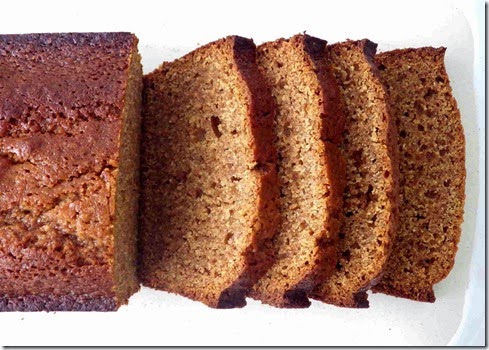
I've posted a recipe for this classic cake  before but there are probably almost as many recipes for pain d'épices as there are people who make it so why not another one? It's such a useful cake to have around. You can eat it any time you fancy on its own or with some jam or marmalade (I like a slice at breakfast time) but it can also be eaten with pâté or even cheese. When you've had enough of that, you can use it to thicken and flavour casseroles (such as Carbonade ) or whiz into crumbs and use them to flavour crumbles or as a coating for fried or baked meats, cheeses or even fish. There's a wide variation in spices between pain d'épices recipes and I've decided that there's very little point in trying to be authentic because I'm convinced that nobody really knows what the authentic spices should be. For me a little aniseed gives the characteristic flavour of this cake but, on the other hand, my use of cardamom might be seen as a bit of an ecce...

Lemon And Cardamom Nonnettes

Image
I've wittered on about nonnettes in the past   but I love them and I can't understand why everyone else in the world doesn't feel the same way. So apologies for nearly repeating myself but here's my current favourite variation on the nonnette theme, replacing the more traditional orange flavours with lemon. Nonnettes are most commonly associated with the town of Dijon, although there are bakers elsewhere in France who seem a little unconvinced by this suggestion. Wherever the recipe originated, though, it's certainly been around a long time. In fact, it seems to  date from the middle ages. One notable feature of these cakes is that they don’t contain any eggs (well, not the way I make them anyway). I've used lemon curd in this particular version, but if you want to avoid eggs, substitute marmalade or jam (raspberry, blackberry or boysenberry will all work well). Nonnettes are closely related to pain d’épices and so will often contain a more complex mix of sp...

White Chocolate and Honey Coulant with Macadamias and Pistachios

Image
I haven’t added any recipes to the blog lately because, due to circumstances being completely out of control, I haven’t cooked anything for several months. I'm hoping that situation will change soon, but for now here’s something that I baked last year and didn't get around to posting. I'm aware that the world is in danger of disappearing under a sea of chocolate fondant and coulant recipes but they’re undeniably delicious and decadent and there’s still something special about cutting into a little cake and watching the chocolaty loveliness flow out. This particular version is adapted from a recipe by Pierre-Yves Lorgeoux of the ‘Le Pyl-Pyl’ restaurant in Vichy. I’d love to say that I've been there but I have to confess that I saw it on an episode of ‘Les Escapades de Petitrenaud’ a while ago. It does look to be an excellent restaurant, though, so if you're ever in the area maybe you could go on my behalf.  I can still remember the first time I ate a cho...

Véritables Macarons de Somewhere or Other

Image
If you're unlucky enough to have been reading this blog for a while then you might have noticed a certain obsession with French baking and you can’t wander through the world of French baking for too long without falling over a macaron. Everyone must be familiar with the modern macaron, beloved of fine patisseries everywhere, but there are more traditional versions of the almond cakes which turn up in various places around France. Amiens, Reims, St Emilion, St Jean de Luz, Montmorillon, Cormery, Melun, Niort and Nancy all have their own versions and that’s just the ones I can think of for the moment. I feel an urge to include a few random facts at this point  (sorry, I can be really annoying sometimes): There’s a vaguely plausible theory that macarons may have been baked first in ancient Persia, although there’s little doubt that they arrived in France via Italy. Cormery claims the oldest recipe - allegedly dating from the 8 th century. The Cormery macarons are ring-shap...

Honey and Brandy Ice Cream

Image
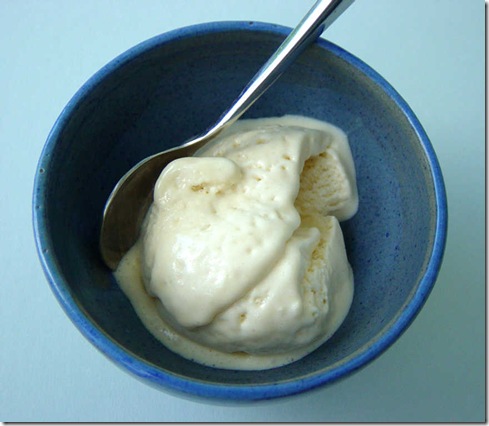
For this month's Random Recipe challenge hosted as usual by Dom at Belleau Kitchen I'm going back to the 1980s for a dessert that's strictly for grown-ups. It's a remarkably simple and quick ice cream that doesn't need an ice cream machine and that stays soft enough to be eaten straight from the freezer. From one of my less-used shelves I randomly picked a slim volume called ‘The London Restaurant Recipe Book’ published in 1983, which features a number of the best-known restaurants of that time. It's like a window onto a lost age. Alistair Little was still at 192, Stephen Bull was at Lichfield's, Pierre Koffman was at La Tante Claire and David Bowie had just released ‘Let's Dance’. French fine cuisine was still the predominant style, although I rather doubt the Frenchness of some of the recipes in this book. The random page took me to recipes by Patrick Gwynn-Jones of Pomegranates. Mr Gwynn-Jones opened this basement restaurant in Pimlico back in 197...

Pain d’Épices

Image
I really like pain d’ épices , especially for breakfast, but there are huge variations in the texture and taste depending on where you buy it or whose recipe you follow. I like it soft inside, very full of honey and not heavily spiced. I've tried different techniques, flour combinations and flavourings and I've now arrived at this hybrid recipe that finally produces the kind of result that I've been looking for. With all that  honey in the cake it should keep well but so far it's been eaten too quickly to confirm that. Incidentally, my favourite commercially produced pain d’ épices  was sold by the apiculteur Marc Fourneaux in Dieppe market on Saturday mornings, and hopefully still is – though I haven’t been back there for a while. 200 g ‘00’ flour 50 g wholegrain rye flour 2 tsp baking powder 1 tsp ground ginger 100 ml milk 350 ml runny honey (this is actually a little more than one of most of the standard jars in the supermarket) 40 g dark brown soft sugar ...