Posts

Showing posts with the label Historic Recipe

Mushrooms Arméniennes

Image
I can't really describe this classic recipe as forgotten, but it seems to be overlooked and unfashionable these days. It fits perfectly with my plan to gather some of the recipes that I've been meaning to get around to for years. The first version of this recipe (at least, in English) seems to have surfaced in Elizabeth David’s ‘A Book Of Mediterranean Food’ in 1950 (interestingly, she suggests using red or white wine). It became a staple of the celebrated restaurant ‘The Hole in the Wall’ in Bath and its chef George Perry-Smith through the 1950s and 60s. In the following two or three decades, versions of the recipe surfaced now and then, but I've not seen it mentioned much in the new century. It's a simple recipe that's too tasty to fade away, so here's my version, for what it's worth. The definition of “button” mushrooms is a bit loose and if yours are not quite as small as you might expect, then extend the cooking times a bit. I've used unsmoked pance...

Beetroot – An Ocklye Dressing And A Pomegranate Dip

Image
I know that there are plenty of people around who outwardly look quite normal but inexplicably don't like beetroot. I'm definitely not one of them. Recently I made a mistake and bought too much beetroot. Actually, that was a good thing. It gave me the chance to make a couple of special but really simple beetroot treats. Beetroot In A Sort of Ocklye Dressing This is based a little loosely on a recipe from the Ocklye cookery book published in 1909. The book is described as ‘recipes by a lady and her cook’, which might sound a bit off-putting but it's actually a very usable and varied set of recipes. Well, mostly usable - I wouldn't advise trying to find sun-dried turtle in your local supermarket. Eleanor Jenkinson (the lady) was the author of the book but I think we should be celebrating the skill of Annie Hobden (the cook), who had rather a lot to do with it. 1 tsp white wine vinegar ½ tsp tarragon vinegar ½ tsp Dijon mustard 2 tsp runny honey 2 ...

Castagnaccio

Image
To end my very short series of "the Italian recipes that I really had to write down sooner or later" I'm offering something to finish the meal. This chestnut cake is based on a truly venerable recipe dating back as far as the 16th century but many variations have been turning up recently in glossy cookbooks. Unfortunately, the authors frequently disagree on just how the castagnaccio should look and taste. So when I got hold of some chestnut flour (it was French not Italian, but that's life) I just had to try playing around with it for myself and I've decided that this relatively dense version works best for me. This is a remarkably easy dish to put together. In fact, the most difficult thing seems to be choosing which flavourings and additions you might fancy. I'd suggest that raisins are essential. I soaked mine in sloe gin, which isn't remotely Italian but works really well. Another alcohol, Earl Grey tea or even water will do the job if you prefer. P...

London Pie - Sort Of

Image
I was reminded of this dish while meandering along the back alleys of some old cookbooks. It's a variation on cottage pie and the most obvious difference is that you don't usually get fruit in a cottage pie. I don't know the exact history of this recipe but I'm sure that this pie was around in some form during the period of rationing after the war. At that time small amounts of meat were often mixed with any available veg and fruit to make it go further. I can remember eating something like it in the 1970s but it seemed to fade away around the end of that decade. Meat combined with fruit has a very long history in British food and is common enough now in more fashionable, imported dishes so I thought I'd try a personal London Pie revival. Less sweet varieties of apple are best for this recipe in my opinion and I've used both cooking and eating apples to give a contrast in texture. The sour quality of the apples is offset by the dried fruit and the sweetness in...

Munich Pudding

Image
Every so often I come across a historic recipe that sounds barmy but just can't be ignored. I really want to know what it tastes like. This is definitely one of those ‘can't pass it by’ sort of recipes. Essentially it's a variation on a bread and butter pudding but the twist is that it was meant to be cooked in a paper bag. The original recipe is from Nicolas Soyer's ‘Paper-Bag Cookery’ first published in 1911 and is described as ‘Pudding à la Munich’. This book has been the subject of a fair amount of (mostly academic) ridicule over the years but I think that's unfair. Nicolas Soyer was the grandson of the renowned chef Alexis Soyer but he has a claim in his own right to be the original ‘modern’ celebrity chef. He was probably the first to understand the power of marketing and branded goods. If you wanted to make some of the recipes in ‘Paper-Bag Cookery’ then you really needed to get hold of some of Soyer's own paper bags which came with his signature pri...

Tangerine Gin

Image
This is a seasonal drink that's very easy to make, tastes lovely and might even be described as festive if I were the festive type. I decided to make some when I was thinking about how much I missed Belfast gin. There are some very fine gins available, but back in the 1980s Belfast gin with its citrus flavour was always my favourite. Sadly I believe the gin disappeared sometime in the 1990s. This is definitely not a recreation of Belfast gin, it’s just inspired by it. In fact it’s more a way of producing a posh and expensive tasting liqueur without spending too much time or money. Once the Seville oranges arrive in the country you can use those in place of the tangerines. This is quite an old recipe - there's a version of it in the Ocklye cookbook of 1908, for instance - but it deserves a revival. You can drink a little nip as a winter warmer, mix it with tonic or sparkling water for a longer drink or add it to cocktails. The tangerine combines well with lemon or with summery...

Palestine Soup

Image
Palestine soup has nothing whatever to do with Palestine. It seems to have been given that name because it’s made with Jerusalem artichokes. Jerusalem artichokes have nothing whatever to do with Jerusalem and aren't artichokes. Anything that odd just has to be good. In fact, it’s one of my favourite vegetable soups and it so happens that it’s also very easy to make and, thankfully, low in fat. I first came across Palestine soup in cookery books dating back to the early 1900s, but I think the dish is a fair bit older than that. Most recipes combine the Jerusalem artichokes with turnips or potatoes, which maintain the creamy white colour of the finished soup. I like to add carrot, which provides a nice touch of sweetness but does change the colour. (Unless you can find a heritage variety of white carrot). A few years ago, Mark Hix published a Palestine soup recipe with some hazelnuts added, inspired by Auguste Escoffier’s ‘Purée de Topinambour’. The hazelnuts enhance the fla...

Tarta de Santiago

Image
This is a really well known traditional cake that you’ve probably seen many times before in books and blogs but I can’t resist bringing you my own version. It’s such a useful and versatile little treat. There are many variations around, including some which are more like a classic almond tart and some which are closer to the sort of substantial cake served with afternoon tea. For my first attempts at baking this cake many, many years ago I used a recipe that included butter and very pleasant it was too. Then someone from Spain told me that I should try it without the butter and that’s the way I prefer to make it now. This version is light, moist, simple, flourless and, admittedly, a little fragile. Although you can serve it very successfully with tea or coffee, this cake comes into its own as an excellent and easy dessert at any time of the year and after pretty much any sort of main course. You can serve it with cream, custard, yogurt or ice cream. You can also serve it with eithe...

Devon Flats and the Olympic Time Trials

Image
You may have noticed that London is hosting the 2012 Olympics. I have the greatest respect for Olympians and sports people everywhere but sport tends to baffle and bemuse me in a similar way to calculus. I accept that it's my loss. The only real exception for me  is cricket and even then I only enjoy the game when nothing much is happening. On the other hand, since the Olympic Cycling Time Trials took place in Surrey and actually passed by about a 1 minute walk from my front door, I would have to be a serious curmudgeon not to take a look. Well, I may be a curmudgeon but I'm rarely serious. I reckoned that I'd need sustenance to keep me going throughout the event. As I understood it (which is not very well), the cyclists in the time trial would set off at 90 second intervals, so I'd have to make something that I could eat in less than 90 seconds. That seemed to call for biscuits. Of course, it had to be British biscuits for patriotic reasons and so I baked some very...

Gooseberry Pudding

Image
The food and drink of Yorkshire might bring to mind rhubarb, Yorkshire pudding, Old Peculier ale, curd tart or a slice of fruit cake with a piece of Wensleydale cheese amongst many other fine things. On the other hand, you might not immediately associate gooseberries with Yorkshire. In fact, there's a long and very proud tradition of growing gooseberries in that county. The finest symbol of that tradition is the Egton Bridge Gooseberry Show, which is now over 200 years old and, I believe, can boast that one of its competitors holds the world record for the heaviest gooseberry. This recipe doesn't require world record sized berries. It’s a very old-fashioned pudding that's based, albeit loosely, on an Eliza Acton recipe from 1845. Actually, in some form or other, the dish is probably a fair bit older than that. It's not the most attractive looking pudding but it is seriously full of flavour. This should serve four unless you have the appetite of a particularly aggress...

An Eccles Cake For Mr Henri

Image
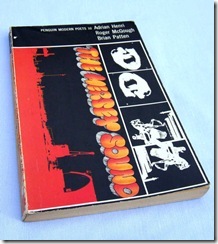
This is a bit of rambling story, but I promise that there'll be a recipe at the end. Back in the latter part of the 1960s there was a particular book that came to be essential reading for anyone in the UK wanting to read poetry but who thought they might just be vaguely in tune with the times as well. “The Mersey Sound” was a Penguin paperback collection of poems by Adrian Henri , Roger McGough and Brian Patten and was just about affordable to anyone. My copy cost 4 shillings (20p). Over the years I've lost and given away a large number of books, but I've always kept this one – even if it is tattered and yellowing. The other day, I happened to hear a Liverpool Scene track (the band that included Adrian Henri as resident poet) and I decided to reread his poems from this ancient volume.  The last Henri poem in the collection ‘Mrs Albion You’ve Got A Lovely Daughter’ is an ecstatic (and many years on, I admit, not a little dated) celebration of Liverpool (‘Albion's ...

Gubbins Sauce

Image
The other day, for some strange reason, I thought about Nathaniel Gubbins. I'd read some of his musings many years ago but it was obviously time for a return visit. Nathaniel Gubbins was an alias of Edward Spencer who was writing about food around the end of the 19th century. After a quick search I came up with probably his best known book 'Cakes and Ale'. For this month's Random Recipe challenge Dom of Belleau Kitchen has asked us to select the first or last recipe in a randomly chosen book. It occurred to me that you can't get a much more randomly chosen book than this, so I thought I'd give it a go. 'Cakes and Ale' isn't really a recipe book - it's described by the author as a 'dissertation on banquets interspersed with various recipes'. Sure enough in chapter two I came across the first "real" recipe: 'Gubbins Sauce' This is probably one of the best-known British devilled sauces and I've seen it revived a num...

Duck Apicius

Image
Ever since I picked out a modern interpretation of an Apicius pork dish in Dom’s first ever Random Recipe challenge (and that was quite a while ago now) I’ve been playing around with some of the other recipes (I use the term loosely) in this text from ancient Rome. Since my Latin is a little rusty, I’ve lazily resorted to translations I’m afraid. A brief QI style digression: There are actually ten “books” in the Apicius writings that (sort of) add up to a complete treatise on cooking. The books are named in honour of Apicius, who was known for his love of fine food, but were actually compiled long after his death. And I think that’s more than enough facts for now. You need a fair amount of imagination with some of the “recipes” in Apicius: there are few exact quantities given or methods described and some of the ingredients, such as the plant silphium or laser , no longer exist.  So I feel justified in bringing you a fairly free adaptation of an Apicius sauce...

Lamb Shrewsbury

Image
This is a simple and traditional recipe that I hadn’t made or even thought about for many years until the other day when I saw it mentioned in a restaurant menu dating from the early eighties. I think Lamb Shrewsbury is most often found as a sauce accompanying roast lamb and that’s probably the most authentic version. The recipe here, though, is for pieces of lamb cooked in the sauce and is a recreation of the way I first came across the dish sometime in the early or mid seventies. It’s a little retro but then so am I, probably. I seem to remember that this dish was often served with buttery mashed potato to soak up the sauce, but for this remake I served it with some roasted new potatoes and steamed green beans. This will feed 2 but probably with some sauce left over. You might need to play a seventies album while eating in order to get the full impact – maybe ‘Fleetwood Mac’ or ‘The Year Of The Cat’. 4 tbsp redcurrant jelly 2 tbsp Worcestershire sauce Juice of 1 lemon...

Le Pommé

Image
My apologies for the lack of posts and responses to email and comments for the last week or two. I was wandering around Normandy and out of touch with technology. I was very much in touch with apples, cider, pommeau and calvados, of course, and so I think an apple recipe is in order. In fact, this recipe is from the Sarthe region rather than Normandy but let's not worry about geography. Pommé is a kind of apple jam without added sugar – well, actually it's more of a cross between a jam and an intense compote. The only ingredients are dessert apples, cider and a lot of time. The result is an amber-coloured, soft jam with an extraordinary depth of apple flavour. The flavour of  pommé will vary a lot with the type of apple chosen and I think the best option is to use a mix of sharp and sweet apples, if you have them. I used a mix of British dessert apples with Worcester Pearmain the main variety. The recipe doesn’t take a lot of effort once the preparation's done...

Pork Apicius

Image
Dom at Belleau Kitchen has issued  a new challenge  - to cook a random recipe from your cookbook collection. Dom suggests taking all the books off the shelves, but I couldn't quite face that so I used a random number generator instead. That gave me 3 shelves from the bottom and then 8 books from the right. I found myself holding a copy of 'The Cuisine of Alain Senderens' , first published in 1981 (and out of print, I believe). I had a slightly bad feeling about this – it contains some scary recipes. I've nothing against M. Senderens, of course, especially since he's the man who sent back his three Michelin stars. Come to think of it, how do you do that? Do you put them in a star-shaped envelope and post them?  The random page number (66) took me to 'Ragoût Malin' – this is a ragoût of frog's legs, oysters and langoustines. Dom said we shouldn't cheat and should cook whatever recipe was chosen but I wasn't going to ask the local shopkeepers i...