Posts

Showing posts with the label Dessert

Beurré Normand

Image
I've been posting recipes on this blog for more than 15 years now and I've included most of the recipes that I wanted to record in that time. Lately I've found it very hard to find time to post any more. So, unless something very strange happens, this will be the last post on the blog. For this final recipe I'm going back to one of my recurring themes - French and, in particular, Normandy food. I first came across the beurré in an old, very traditional Normandy restaurant where I'd already eaten four massive courses punctuated by the customary trou normand. The beurré was served at the end of the meal just in case, by some miracle, the diner was still hungry. Apparently Oscar Wilde would often cycle to this restaurant while he was in exile at Berneval-le-Grand and, apart from the tablecloths, I don't think that much had changed in the place since then. I could barely lift myself out of my chair after that meal so I've no idea how Mr Wilde got back on his bik...

Apple Cake for Dessert

Image
Thinking about my current (half-hearted) project to record recipes that I've failed to publish over the years, I realised that I've only included one apple cake recipe . This is odd because back in the 1980s I was strangely obsessed by apple cakes and collected recipes from all over the country. I found that there were broadly two types of English apple cake: one that was best served with tea in the afternoon and one that was best served as a dessert accompanied by custard or cream (clotted for preference, although in these restrained times yoghurt or fromage frais might be more acceptable).  So, to make up for the omission, here's a version of apple cake that's in the pudding category. It has a high proportion of apples to flour and remains very moist as a result. It does still work very nicely with afternoon tea, if sliced carefully. Sadly, due to erratic record keeping (I was like that in the 1980s), I'm not sure where I found the original version of this recipe....

Pain d’chien

Image
For years I've been intrigued by food from the very north of France, specifically around la Côte d'Opale. In part because, even in France, it's a cuisine that's often unfairly dismissed as consisting largely of variants of cheese on toast (Le Welsh), frites and mind-numbingly smelly cheeses such as Maroilles (it's actually a very fine cheese, honest). But the other reason was that the area is separated from the southern part of England by a very narrow stretch of sea and I was fascinated by the similarities and differences between the two styles of cooking. I've included a number of recipes that I've gathered from the area in the blog before such as Carbonade Flamande , Turkey with Beer and Juniper , Tarte au Maroilles and, my absolute favourite, Gâteau Battu . But the pain d'chien perfectly demonstrates the similarities between British and northern French food. If you're familiar with British bread pudding then pain d'chien is not surprising a...

Passoã Babas

Image
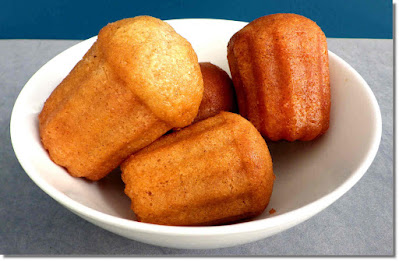
So you've bought a bottle of Passoã to make some porn star martinis at home (it's the most popular cocktail in the UK, apparently) but now what do you do with the rest of the bottle? Well you could make a variation on the classic rum baba. At least, that's what I did. The classic baba is made with an enriched yeast dough soaked in a rum syrup and for many years I thought that everyone made them that way. Eventually a kindly French person took me aside and let me into a secret: a lot of babas are made using baking powder. It's a very quick and easy way to produce babas and I enjoy them just as much as the traditional version.  I used canelé moulds to make the babas simply because I like the shape but small savarin moulds are more usual. I put enough mixture into the mould to make sure that it bulges from the top when cooked. You could be a little more restrained if you like.  If you want to make something closer to a classic baba using this recipe, then omit the vanilla,...

Walnut Cake or Gâteau aux Noix

Image
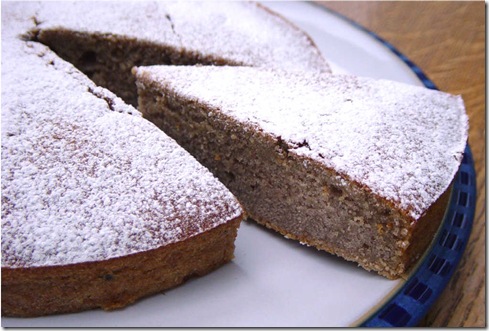
I first ate this cake many moons ago in Sarlat in the Dordogne (or the Périgord Noir if you prefer). It's a town with an abundant supply of walnuts, as well as a truly excellent market. In my selfless struggle to make as many French cakes as possible I decided to recreate this little treat. I soon realised that there were almost as many variants of this cake as there are geese around Sarlat (and that's a lot of geese). At long last this is the version that I think comes closest to that original cake and happily it's also just about the simplest. This really is a cake, honest, but I think of it mostly as a dessert. Small pieces are really good with an espresso or some classic, strong tea but I think it comes into its own when served warm or cold as a dessert with apple or rhubarb compote or poached pear and crème fraîche. It’s also very pleasing when drizzled with dark chocolate. It's possible to buy ground walnuts and that's the easiest way to make this cake b...

Fromage Frais Gâteau

Image
I've called this a gâteau because that's what the French original was called but this is definitely a dessert (or maybe a sweet snack) and not a cake to be nibbled with tea. The French seem to have a great love for flan-like desserts of various kinds such as the classic flan pâtissier,  le millas  made with maize flour from the Charente or maybe the pastizzu made with semolina from Corsica. This dish may follow that tradition but it's a modern and health-conscious invention. I've come across it in many forms in the last 20 or 30 years and I've always been a bit doubtful about some of the simpler and lighter forms of the recipe. Well, having played around with the recipe for a bit, I now realise that I was wrong. A simple and low fat version suits my less complicated tastes these days. If you want a dessert that's lighter and healthier than most cheesecakes but still creamier and smoother than a cake, then this might be right for you as well. In France this...

Sweet Wine and Olive Oil Cake

Image
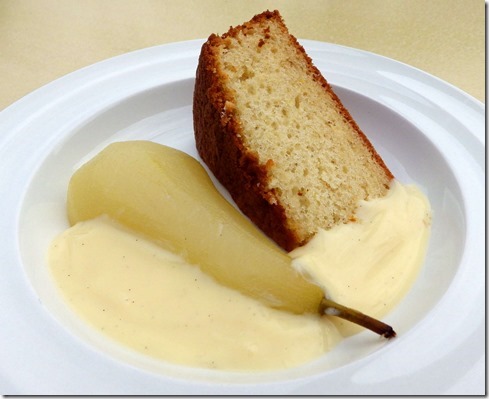
There are plenty of recipes for cakes made with olive oil knocking about but not too many that use a dessert wine as well. Well here's one that I found under a bush in the Languedoc. It produces a moist cake with a fruity flavour that's a little bit different to the norm. Since it's a bit different, I'm not sure that it's the typical British afternoon tea cake, unless your chosen beverage is a fruit tea or maybe a fragrant Earl Grey. Admittedly, others who have tried the cake disagree and like the fact that it adds variety, so what do I know? On the other hand, I do know that it works really well as a dessert cake alongside some fruit and maybe a little crème anglaise or cream. I paired it with a poached pear this time, which is lovely but isn't particularly Languedoc. Poached apricots or peaches would probably be more of a southern French choice. This is a very straightforward cake to make but it's important to choose the wine and oil carefully. Don't...

Teurgoule

Image
In Normandy every Sunday morning in accordance with ancient tradition the fearless men of the Calvados region gather with their forks and hope to hunt the wild and menacing teurgoule. OK, I'm lying. Teurgoule is indeed a speciality of the Calvados area but, let's not beat around the Normandy bush, it's a type of rice pudding. There are a number of stories about the origin of this simple speciality but I'm not sufficiently knowledgeable or gullible to say if they're true or not. So let's just say that this is a very slowly cooked rice pudding that's usually flavoured with cinnamon. That may seem a bit of an incongruous flavour for northern France but once upon a time spices, including cinnamon, would come ashore at Honfleur and the other ports along the Normandy coast. As for the strange name, there are plenty of explanations and it's often translated as “twisted mouth” but, since it has more of a patois or slang origin, I think that “mangled mug” mig...

Castagnaccio

Image
To end my very short series of "the Italian recipes that I really had to write down sooner or later" I'm offering something to finish the meal. This chestnut cake is based on a truly venerable recipe dating back as far as the 16th century but many variations have been turning up recently in glossy cookbooks. Unfortunately, the authors frequently disagree on just how the castagnaccio should look and taste. So when I got hold of some chestnut flour (it was French not Italian, but that's life) I just had to try playing around with it for myself and I've decided that this relatively dense version works best for me. This is a remarkably easy dish to put together. In fact, the most difficult thing seems to be choosing which flavourings and additions you might fancy. I'd suggest that raisins are essential. I soaked mine in sloe gin, which isn't remotely Italian but works really well. Another alcohol, Earl Grey tea or even water will do the job if you prefer. P...

Les Patiences Fraxinoises And Boodle Goes To Provence

Image
If you follow any of Julie Andrieu's TV programmes then you'll know that she's fond of wandering around digging up authentic, local recipes. (My wife is firmly of the opinion that I'd follow Julie Andrieu anywhere she wanted to lead me. She may well be right.) Ms Andrieu visited La Garde-Freinet in Provence a few years ago and was given a recipe for the authentic patience fraxinoise. Until I saw the programme I thought they were little almond biscuits but it turns out that I knew nothing. In fact, these biscuits are somewhat similar to a langue de chat, although there are a few major differences: they don't include any butter, they're flavoured with orange flower water and they're round and not shaped like a cat's tongue. I did depart a little from the original recipe by adding some maple syrup. Strictly speaking these should be baked in a very hot oven – something wood-fired would be ideal – but they work perfectly well in a domestic oven on a high ...

Munich Pudding

Image
Every so often I come across a historic recipe that sounds barmy but just can't be ignored. I really want to know what it tastes like. This is definitely one of those ‘can't pass it by’ sort of recipes. Essentially it's a variation on a bread and butter pudding but the twist is that it was meant to be cooked in a paper bag. The original recipe is from Nicolas Soyer's ‘Paper-Bag Cookery’ first published in 1911 and is described as ‘Pudding à la Munich’. This book has been the subject of a fair amount of (mostly academic) ridicule over the years but I think that's unfair. Nicolas Soyer was the grandson of the renowned chef Alexis Soyer but he has a claim in his own right to be the original ‘modern’ celebrity chef. He was probably the first to understand the power of marketing and branded goods. If you wanted to make some of the recipes in ‘Paper-Bag Cookery’ then you really needed to get hold of some of Soyer's own paper bags which came with his signature pri...

Pain de Gênes

Image
Most people I know are not only deeply suspicious of fat these days but are also putting on false beards and crossing the street to avoid bumping into sugar and so I suppose it's not surprising that I haven't added a cake recipe to the blog lately. But here's one that I've had around for a while. For some incomprehensible reason I was reluctant to publish this recipe because I thought that it wasn't an authentic Pain de Gênes. That's the first time I've been bothered by authenticity and, to be honest, it will probably be the last time too. The original and authentic Pain de Gênes should be made with almond paste unless I'm much mistaken (and I could be) but this recipe uses ground almonds and no flour. Oddly enough, I first came across this style of Pain de Gênes in my venerable copy of the 1950's classic 'Constance Spry Cookery Book' but since then I've seen a number of French recipes that are made in a similar way. It's a beautifu...

A Slacker's Christmas Standbys

Image
It's been a difficult kind of year and I know that right now we're all supposed to be making huge efforts to feed vast numbers of people in a festive manner but actually I'm longing for simple and quick recipes. So here are two ridiculously simple dishes that are perfect for that bothersome unexpected Christmas guest and are guaranteed to let you get back to the telly without undue delay. Artichoke Dip If you were around and reading cookery books or magazines in the 1980s then you'll already know this first little cheat. It seemed to turn up just about everywhere and with good reason - it’s useful, speedy and very tasty. Buy a jar of artichoke hearts in oil. Put the contents of the jar in a blender or processor with a squeeze of lemon and a few turns of pepper. Wizz until it's as smooth as you fancy. If the dip is too thick then add a little more oil. Pour into a bowl, drizzle with a little balsamic vinegar or dust with paprika. Serve with some fan...

Proustian Sunsets and a Crème au Chocolat

Image
Once upon a time I imagined that I'd get around to reading Proust when I was old. A few years ago I was walking along the Promenade Marcel Proust on the Cabourg seafront in Normandy as the sun was going down and it occurred to me that I was old and so I'd better get on with it.  Cabourg was the inspiration for the Proustian Balbec and the sunsets are as notable in real life as they are in literature. (And you can still get a notable seafood dish or two along the Cabourg seafront too). So wearing suitable clothing and with a lot of strong coffee to hand I read all seven volumes. It took a while, but I survived. Don't worry I'm not going to attempt any form of literary criticism - this is a food blog, I seem to remember - but there are two observations that I'd like to pass on. First, at some point during volume two I actually started to think that prodigiously long sentences were perfectly normal and had to give myself a serious talking to in short phrases. Secon...

Chocolate “Mousse” and “Parfait” with Meringue Shards and No Shopping

Image
This may not be the most serious dessert I've ever made but it's a fine store cupboard treat for chocolate lovers. It uses two types of chocolate (dark and white), egg whites, sugar and water - and that's it. I could tell you that this was a personal challenge to create a dessert from the ingredients lying around in the kitchen or I could admit that I was far too busy watching old Keith Floyd episodes to bother going to the shops. The usual rule for chocolate desserts is ‘thou shalt never mix chocolate and water’ but this dessert depends upon the Hervé This method of doing exactly that to create a chocolate cream or mousse. I've been using this technique for a few years now and I'm not getting tired of it yet. It's the intensity and purity of the flavour that I like so much. Let's face it, Mr This is a genius and should have several parks named after him. I layered and arranged the chocolate elements with meringue shards, but you can forget the meringue...

Marmalade Frozen Yoghurt

Image
I first came across marmalade ice cream sometime in the 1980s when Sophie Grigson published the recipe in a London evening newspaper. At least, that's if my memory is to be trusted, which it's not for the most part. Essentially the recipe is a simple combination of double cream and marmalade and produces a rich, no churn ice cream beloved by just about anyone who tries it. Very similar recipes have appeared quite often over the years since then. I thought I'd try making a lighter version of this little treat using zero fat yoghurt and I'm pleased to say that it works well. Let's not pretend that it's healthy, though: there's virtually a whole jar of marmalade in this recipe. Until recently I would usually strain low fat Greek style yoghurts when making frozen desserts but there are some in the shops now that are thick enough to make that unnecessary. I've tried making this by simply putting the mixture in the freezer and also by using my very basic i...

Gâteau Ardéchois or a Chestnut Cake from a Can

Image
Several years ago I was called on to make some cakes as part of a birthday celebration. That's normally pretty straightforward but at the time I was down in the south-west of France, in the Gers, and I wasn't quite sure what the local French people would make of British cakes. After all, the mayor had been invited and you certainly don't want to upset him. We decided that small chestnut cakes covered in icing would be a bit different and a good alternative to some of the other delights on offer. They turned out OK but I did notice that some of the French guests seemed to look at them a little oddly. Maybe I'd overlooked the French tradition of chestnut cakes and gone a little bit too far from the norm. After that experience I started looking for a more traditional form of chestnut cake and since they've got an awful lot of chestnuts in the Ardèche, that seemed like a pretty good place to start. To be honest, I'm not absolutely sure how close this cake might b...

Carrot Halwa For Al

Image
I think of Al whenever I see carrot halwa on the menu of an Indian restaurant (and, believe me, that's quite often). Al did a lot of the cooking at iDEATH. His signature dish was ‘mess of carrots’. Al was definitely known for his carrots. When he and Pauline cooked together ‘they made a potato salad that somehow ended up having a lot of carrots in it.’ I think if Al made a dessert, then this would be the one. It would probably be sweetened with watermelon sugar. In the early 1970s when I first read Richard Brautigan’s ‘In Watermelon Sugar’ it seemed an extraordinary book and, as it happens, it still does today. The book was actually written in 1964 and published in 1968 and I can't imagine it being written in any other decade. The narrator (‘Just call me whatever is in your mind’) lives in a shack near iDEATH and tells us of his life in a place where many things are made of watermelon sugar and the sun shines a different colour every day. I'm wondering what the people ...